Central Air Conditioning in the Pacific Northwest — A Homeowner's Guide
For most of the twentieth century, the question of central air conditioning in a Portland-area home was easy to dismiss. Summers were warm but brief, nights cooled reliably, and opening windows was considered sufficient. That calculus has shifted. The heat dome that gripped the Pacific Northwest in 2021 was not a curiosity — it was a signal that the region's outdoor environment has become something homeowners must take seriously. Paired with increasingly smoky wildfire seasons that make open windows a health liability rather than a comfort strategy, central AC has moved from an extravagance to a genuine question worth thinking through.
This guide is for Pacific Northwest homeowners somewhere in that thinking process — maybe after a brutal stretch of July nights when the house held heat until two in the morning, or after a week when the air quality index made opening anything feel inadvisable. It is written to orient you, not to sell you anything. The basic mechanics are covered well in this general overview of air conditioning.
How Central Air Conditioning Actually Works
Central air conditioning is a refrigeration system. It moves heat from inside your home to outside, rather than generating cold air from nothing. A refrigerant circulates between two coils — one inside the home, one outside — absorbing heat from your indoor air and releasing it outdoors. A blower fan then pushes the cooled air through your existing ductwork and out through the registers in each room.
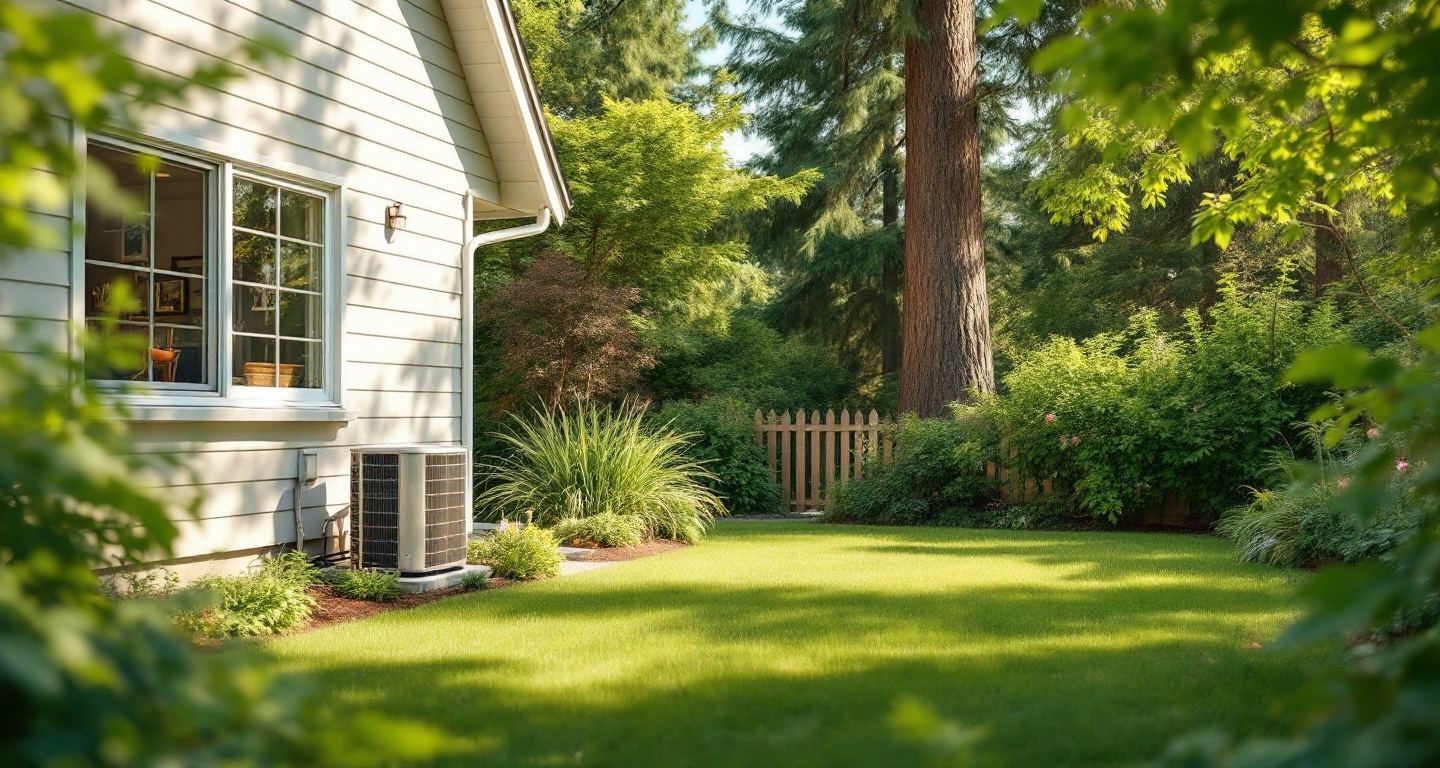
The indoor component is typically installed near your furnace and shares the same air handler and duct network. The outdoor unit — the box that sits beside the house and hums — is where the heat gets expelled.
One important distinction in our region: heat pump systems work on the same refrigeration principle but can also run in reverse, providing heat in winter and cooling in summer from a single system. In the Pacific Northwest's mild heating climate, heat pumps are often the more efficient path. For homes without existing ductwork, ductless mini-splits accomplish the same goal room by room without central ducting.
Why This Conversation Has Become More Urgent Here
The Pacific Northwest has always prided itself on moderate weather, and that pride is not entirely unfounded — our shoulder seasons remain enviable. But summer peaks have climbed. The 2021 heat dome brought temperatures well above anything in recorded regional history, and it was less an isolated anomaly than an early demonstration of conditions that may recur.
Beyond raw heat, wildfire smoke has complicated the traditional coping strategy of cross-ventilation. Opening windows on a ninety-degree day becomes an impossible trade-off when the air outside carries particulate matter at unhealthy concentrations for days at a stretch. Central AC, by recirculating and filtering indoor air, closes that loop — the system cools the house without requiring an exchange of outdoor air, and a quality filter catches much of the fine particulate before it reaches your lungs.
Older homes — and the Portland metro has many of them — were designed around the assumption of open-window cooling. They often lack adequate insulation and may have been sited without any thought for solar gain during a genuine heat event. This is the context in which many homeowners are now revisiting central AC.
The Main Decisions Ahead
Deciding to install central air is not one decision — it is a series of them, and the answers are interconnected.
**Do you actually need it?** This depends on your household's specific vulnerabilities, how your home sits on its lot, how well it is insulated, whether you have a basement that stays cool, and how many genuinely uncomfortable nights you experienced in recent summers. For some households the answer is obvious. For others, insulation upgrades and strategic shading reduce the problem meaningfully before mechanical cooling becomes necessary.
**What system fits your home?** Homes with existing forced-air ductwork are strong candidates for a traditional central AC or heat pump addition — the distribution infrastructure already exists. Homes heated with radiators, baseboard electric, or in-floor systems have no ductwork, which makes ductless mini-splits the most practical path.
**Sizing matters enormously.** An undersized system runs constantly and fails to cool the home during peak heat. An oversized system cools too quickly, cycles on and off without running long enough to dehumidify the air, and tends to wear out faster than a properly matched unit. Correct sizing requires an actual load calculation based on your home's square footage, insulation levels, window area and orientation, and local climate data.
**Repair versus replace.** If you have an existing system that is underperforming, the decision turns on age, refrigerant type, repair cost relative to replacement cost, and the efficiency gains a newer unit would bring. A more efficient system consumes meaningfully less electricity over the years it runs.
How to Approach This Calmly
Start with an honest assessment of your home's current performance and your household's actual needs — not during a panic on the hottest afternoon of the year, but in a quieter moment. Consider whether your home has obvious thermal weak points: an uninsulated attic, west-facing glass without exterior shade, a bedroom that traps heat on the top floor.
From there, getting quotes from multiple qualified installers and asking each to perform an actual load calculation — not just a square-footage estimate — gives you a real basis for comparison. Ask about heat pump options if you heat with a gas furnace. Ask about filtration if wildfire smoke is a concern.
Pacific Northwest summers have changed. The planning horizon for this region now includes recurring heat events and smoke seasons that would have seemed exceptional two decades ago. Central air conditioning may be the right response for your household, and the pages ahead are designed to help you think through that question clearly — from whether you need it at all, through installation, maintenance, and long-term running cost. For a local example of how cooling services are presented to Portland-area homeowners, see https://sites.google.com/view/efficiency-heating-cooling/services/air-conditioning.